Most ageing dogs experience some degree of arthritis. But how do you know when it's time to do something about it? Dogs frequently display indicators that arthritis-related pain diminishes their quality of life.
1. Difficulty getting out of bed
You may have noticed your dog staying longer in his bed, getting up stiffly and being slow to get moving. He may improve as he "warms up" by walking around.
2. Struggling to keep up on walks
Older dogs are naturally less boisterous than younger dogs but if your dog is lagging behind when previously he kept up easily, arthritic, painful joints could be the cause.
3. Difficulty moving up and down stairs
Negotiating steps puts additional strain on a dog's joints. You might notice your dog is reluctant to move up or down stairs or negotiate obstacles.
4. Less playful
You might notice that your dog is less motivated to chase balls, retrieve sticks, or just goof around.
5. Difficulty jumping into the car
If your dog used to jump easily into your vehicle but is now hesitating and looking to you for help, his loss of confidence could be the result of painful joints.
6. Lame/limping
You may have noticed that your dog is moving unevenly, favouring one leg, and/or his head is bobbing as he trots.
7. Irritability
When a dog is suffering from painful joints he may be less tolerant of people and other dogs. He may growl, snap or bite even though this behaviour may seem out of character for him.
8. Moving slowly and stiffly
Your dog may show no other symptoms than being a little slow and stiff in the way he moves. This may indicate low-grade arthritic pain, which can be alleviated.
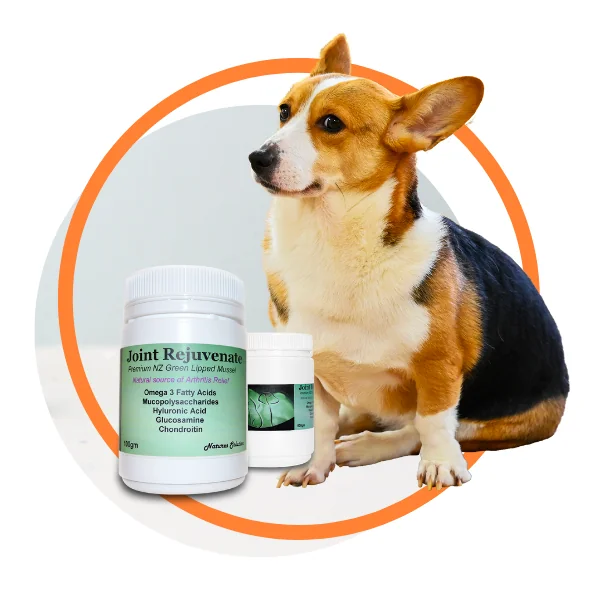
Joint Rejuvenate is a high-grade pure green lipped mussel powder recommended by Veterinarians for the treatment of arthritis in dogs, cats and horses.