Arthritis affects a surprising number of cats, particularly as they age. Radiographic studies indicate that up to 90% of cats over the age of 12 show evidence of degenerative joint disease. Yet many owners attribute the signs — reduced jumping, slower movement, reluctance to be handled — to normal ageing rather than treatable joint pain.
Why Cats Need Specialised Joint Support
Cats present unique challenges for arthritis management. Many common canine pain medications, including certain NSAIDs, are toxic to cats. Their smaller body size requires precise dosing, and their fastidious eating habits mean supplements must be palatable enough to be accepted in food.
This makes natural supplements particularly valuable for feline arthritis management, as they offer a wide safety margin and can be mixed into wet food without detection.
Effective Supplements for Cat Arthritis
The following ingredients have demonstrated benefits for feline joint health:
- Green lipped mussel powder: Provides omega-3 fatty acids, glucosamine, and chondroitin in a single natural source. A clinical study on cats with osteoarthritis found significant improvement in mobility and pain scores with daily GLM supplementation
- Omega-3 fatty acids (marine-sourced): EPA and DHA from fish or mussel oil reduce joint inflammation. Marine sources are far more effective than plant-based alternatives for cats
- Glucosamine and chondroitin: Support cartilage repair and synovial fluid production, though evidence is stronger when combined with omega-3s
Dosage for Cats
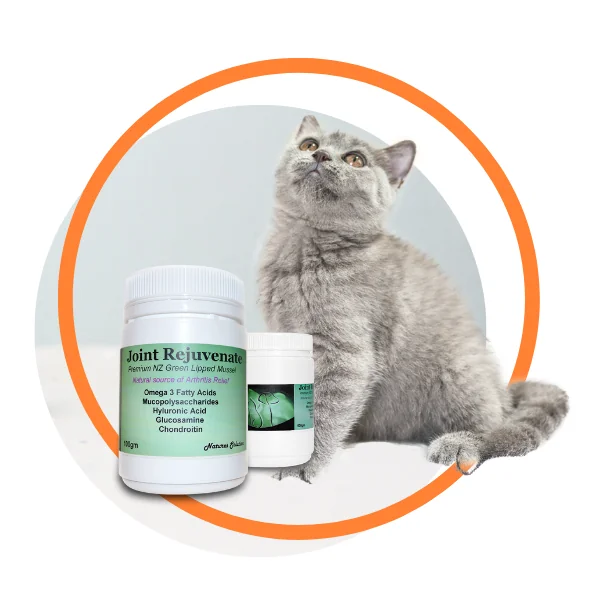
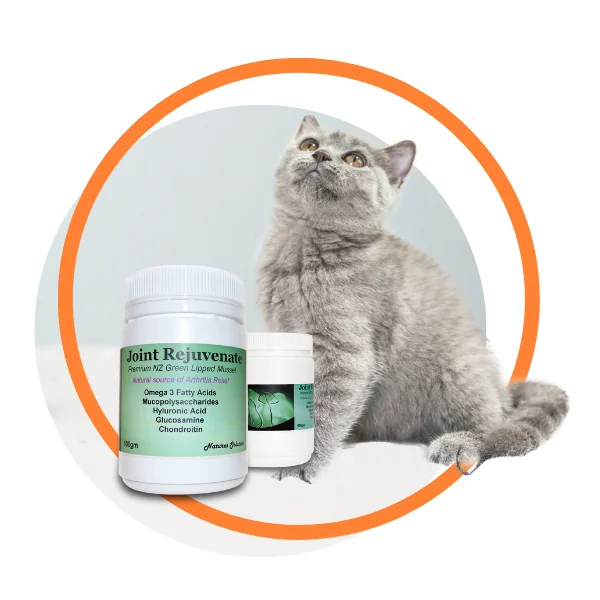
Joint Rejuvenate dosage for cats is 20–60 mg of green lipped mussel powder per kilogram of body weight daily. The upper end of the dose range is recommended for maximum effectiveness. For an average 4 kg cat, this equates to approximately 80–240 mg daily — less than a quarter teaspoon of powder mixed into their meal.
A 14-day loading period at double the maintenance dose helps build therapeutic levels more quickly. Most owners report visible improvement in their cat's willingness to jump and play within 3 to 6 weeks.
Signs Your Cat May Benefit from Joint Support
- Hesitating before jumping onto furniture they once reached easily
- Using intermediate steps (chair to couch to bench) instead of jumping directly
- Reduced grooming, particularly of the back and hindquarters
- Stiffness after resting, especially in cooler weather
- Irritability when picked up or stroked along the spine
If your cat shows any of these signs, a veterinary assessment combined with daily Joint Rejuvenate supplementation can make a meaningful difference to their comfort and quality of life.